Store Focused on One Product Without Paid Ads — Can Pure SEO Replace Ad Spend?
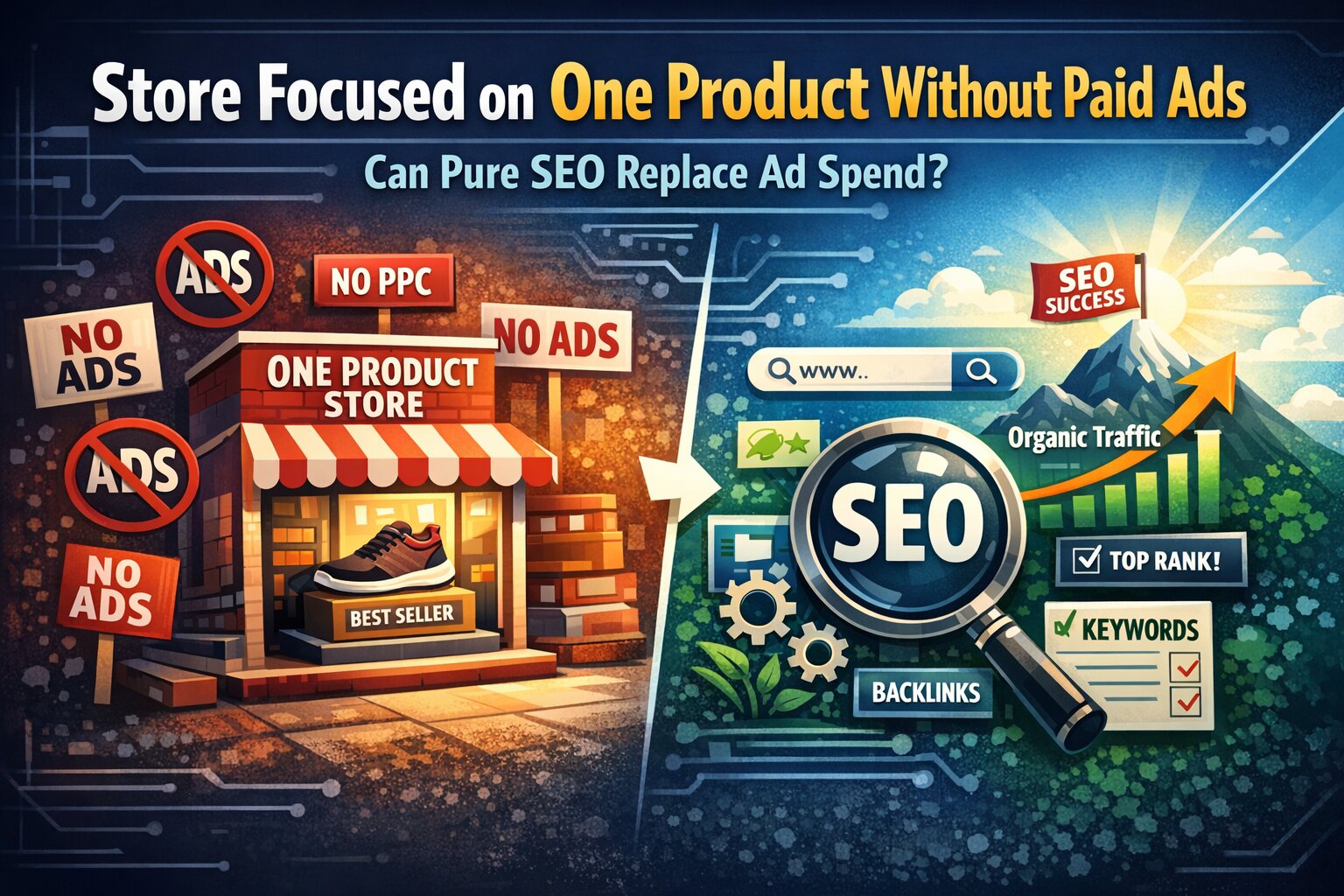
The one product store model has been gaining traction in e-commerce circles for years. Strip away the noise, pick one item, build a compelling page around it, and drive traffic. Simple in theory. The catch? Almost everyone running this model relies on paid advertising as the engine. Facebook Ads, Google Ads, TikTok — the usual suspects. The moment you cut the budget, the sales stop.
We wanted to test a different approach entirely. What if you could power a one product store with nothing but organic search?
The Experiment
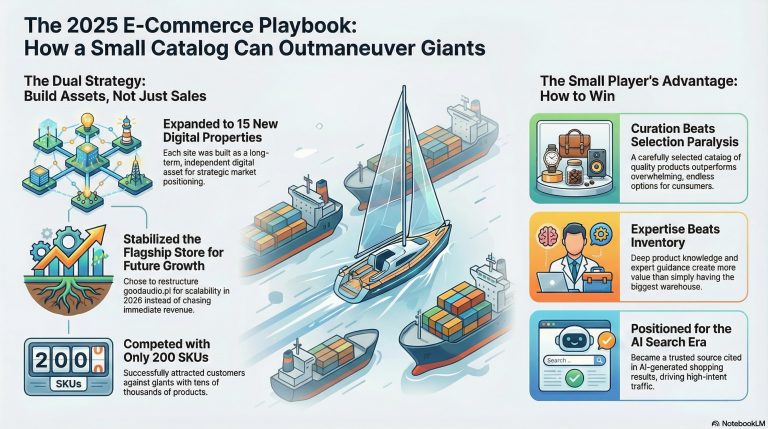
At Pruciak Capital, we run a portfolio of 15+ specialized websites across audio equipment, education, and e-commerce in Poland. Over the years, we developed a methodology we call Pure SEO Density (PSD) — an approach that replaces traditional link-building and keyword-stuffing tactics with a dense network of genuinely valuable content spread across owned, niche-authority websites. Every piece of content answers real user questions and strengthens the authority of the entire ecosystem.
We have used PSD to build visibility for entire domains. This time, we wanted to see what happens when you point the full force of the methodology at a single product.
The inspiration came from a popular Polish e-commerce YouTube channel that advocates for the one product store model. We asked ourselves a straightforward question: can we take that concept and fuel it with pure SEO instead of ad spend?
The Product
We selected an emergency radio by Technisat — the TECHNIRADIO SOLAR 2 from our store goodaudio.pl. The choice was deliberate. Emergency and survival radios are seeing growing demand. The search volume around related keywords is solid with moderate competition. And the product itself is genuinely excellent — solar charging, hand crank, built-in powerbank, DAB+ reception. Something we can recommend without hesitation.
What We Did
The work spanned two of our properties — the store itself (goodaudio.pl) and our dedicated ranking portal (rankingaudio.pl). Every action was designed to build topical relevance and funnel authority toward one product page.
Featured placement on the homepage. The SOLAR 2 was added to a new “TOP Product” section on the goodaudio.pl homepage. No burying it deep in the catalog — visitors see the recommendation immediately upon landing.
Ranked number one across seven product rankings. We positioned the radio as the top pick in seven separate ranking articles on goodaudio.pl, covering categories like best survival radio, best portable radio, best radio with rechargeable battery, and four more related lists. Each ranking is a full-length article targeting a specific user query.
Head-to-head comparison article. We created a dedicated comparison between the TECHNIRADIO SOLAR 2 and another popular emergency radio model. Comparison content is one of the highest-converting formats in e-commerce — it reaches users who are close to a purchase decision and looking for that final push.
Updated existing content. We refreshed a previously published article about radios for crisis situations by adding the SOLAR 2 as a recommended, tested model. This gave the product an additional entry point from a page that already had indexing history and established visibility.
Cross-site ranking presence. On rankingaudio.pl, our separate ranking portal, we built a new category of rankings linking back to goodaudio.pl. The SOLAR 2 appears in the top three positions across five rankings on that domain, generating additional traffic and relevance signals from an external, topically aligned source.
This is the core of the PSD approach. No bought links. No comment spam. No paid placements. Just real content assets across owned, specialized properties that reinforce each other naturally — and deliver genuine value to the reader.
The Goal
We have two concrete objectives.
First, we want the SOLAR 2 product page on goodaudio.pl to reach position one in Google for key queries related to this radio. That means outranking the product listing on the manufacturer’s own website — Technisat. Manufacturer pages carry natural advantages: they are treated as primary sources, have strong link profiles, and benefit from brand authority. Beating them with a third-party store page would be a meaningful proof of concept for the methodology.
Second, we want to answer a fundamental question: how much revenue can a single product generate through organic traffic alone? No ads, no influencer deals, no paid campaigns. Just content, site structure, and SEO.
Why This Matters
If this works, it opens the door to a scalable model. Imagine a network of micro-stores, each focused on one product, each powered entirely by organic traffic from an ecosystem of specialized, authority-building websites. No recurring ad costs. Predictable traffic. Compounding authority over time.
It is a model where time works in your favor — unlike paid advertising, which stops delivering the moment you stop paying.
What Comes Next
We will be tracking rankings, organic traffic to the product page, and sales over the coming months. The results will be published as a follow-up case study.
If you run an online store and have ever wondered whether it is possible to sell without constantly feeding an ad budget — follow this experiment. The answer might change how you think about e-commerce.
Pruciak Capital is an independent digital projects house specializing in building niche-authority web properties. Pure SEO Density is our proprietary methodology focused on creating real user value instead of relying on traditional SEO tactics.